

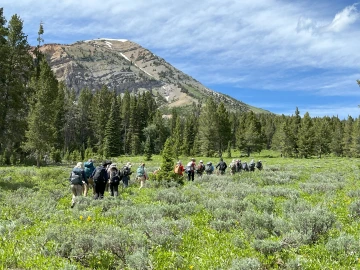
The Department of Geosciences offers 3 Degree Programs.
- Geosciences B.S. (4 Sub-Plans)
- Geoscience and Society B.A.
- Planetary Geoscience B.S.
We also offer a 5 year Accelerated Masters Program in Economic Geology.
Curriculum Handbook
The curriculum requirements for each sub-plan are based on a student’s academic catalog year. Students should review the curriculum requirements of the Catalog Year and Sub-plan for which they are currently declared or if they are considering enrolling in the program.
Current students can identify their catalog year and sub-plan on their UAccess Student Center “Academics” page, as well as on their Advisement Report (UAccess Advise drop-down menu). Contact your Academic Advisor if you are unsure of which curriculum to follow or if you want to change to a newer curriculum year.
Learn About our Programs

PLANETARY GEOSCIENCE B.S. (NEW)
A Planetary Geoscience major is a dynamic field of study that extends beyond Earth to explore the geological processes and features of celestial bodies within our solar system and beyond. Students in this major engage in the analysis of planetary atmospheres, surface features, and geological formations using data collected from space missions, telescopes, and remote sensing technologies.

GEOSCIENCE AND SOCIETY B.A. (NEW)
The Geoscience and Society major is a multifaceted program that bridges the natural sciences with societal implications, emphasizing the intersection between geoscience and broader human contexts. Students explore the intricate relationships between Earth processes, natural hazards, resource management, and human society. Geoscience and Society majors delve into topics such as climate change, environmental sustainability, and the societal impact of geological events.
Geosciences B.S. Degree Sub-Plans
GEOLOGY
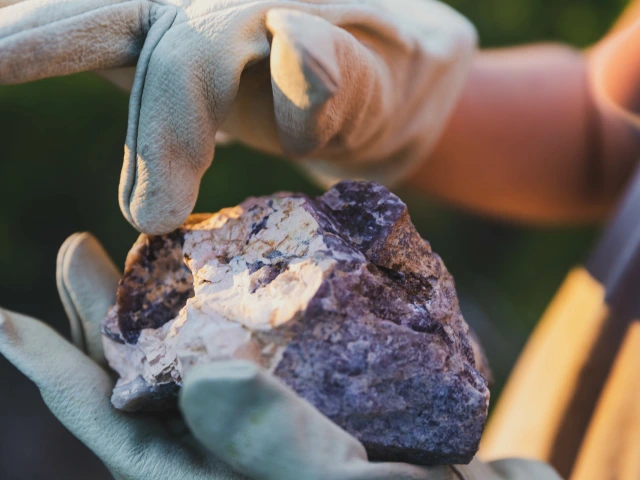
Geology majors explore topics such as the formation of rocks and minerals, the dynamics of plate tectonics, geological hazards like earthquakes and volcanoes, and the evolution of landscapes over time. Through fieldwork, laboratory analysis, and advanced technology, students gain practical experience in mapping, data collection, and geological investigation.
GEOPHYSICS
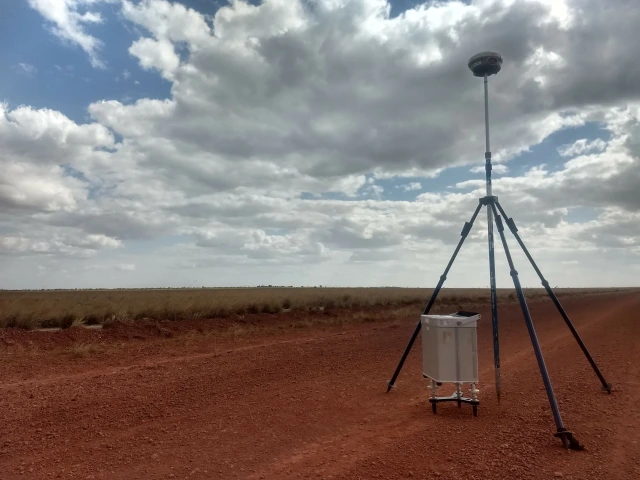
This interdisciplinary major draws on principles from physics, mathematics, and geology to investigate phenomena such as seismic activity, gravitational and magnetic fields, and the composition of the Earth's interior. Geophysics majors use cutting-edge technology, including seismometers, gravimeters, and electromagnetic instruments, to collect and analyze data.

EARTH, OCEANS AND CLIMATE (EOC)
EOC is an interdisciplinary field that combines elements of geology, oceanography, atmospheric science, and environmental studies to investigate the complex interactions between the Earth's lithosphere, hydrosphere, atmosphere, and climate. Students in this major engage in the study of ocean currents, climate patterns, geological processes, and the impact of human activities on Earth's ecosystems.

GEM SCIENCE
Gemology students delve into the geological processes that give rise to gemstones, learning to recognize different mineral structures and crystal formations. This major prepares students for careers in gem and jewelry businesses, museums, or as independent gemologists, combining a passion for science with a keen eye for the aesthetic and commercial aspects of precious stones.
Minors

GEOSCIENCES
A minor focusing focusing on education in the nature, genesis, and history of the Earth and its crust, and the evolution of the environment and biota at the Earth's surface. Graduate minors may choose from classes on biogeochemistry; climate dynamics; geoarchaeology; geochemistry; geochronology; geomorphology; geophysics; mineral resources; mineralogy; paleolimnology; palynology; paleontology; petrology; sedimentology and stratigraphy; structure; and tectonics.