

UofA Geosciences Professor Mihai Ducea Elected as AGU Fellow
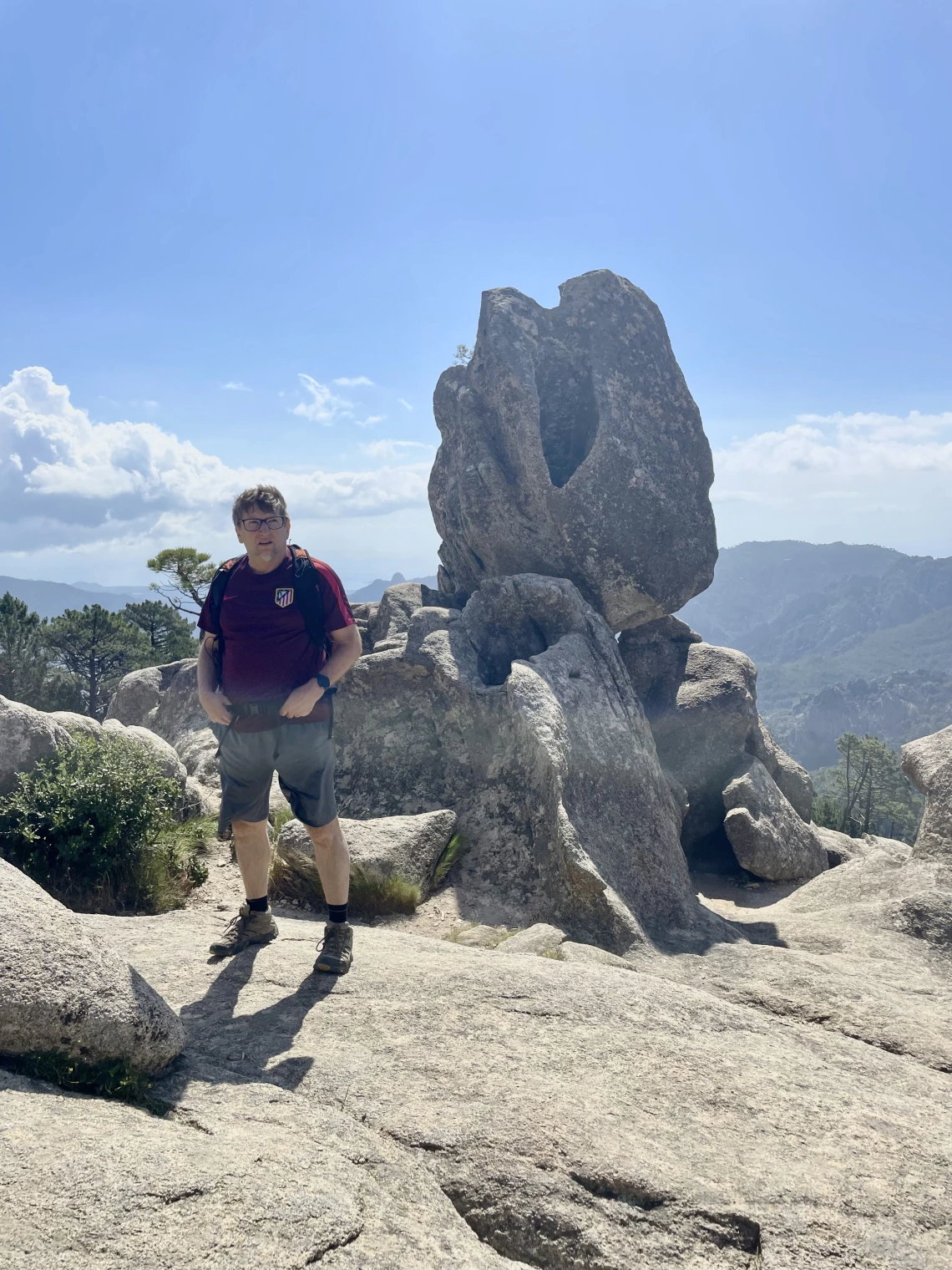
Photo from Professor Ducea - Studying the Corsican Variscan batholith
Congratulations to Professor Mihai Ducea on being named a Fellow of the American Geophysical Union (AGU), the world’s largest organization of Earth and space scientists. Only a tiny fraction (0.1%) of AGU members achieve this status. Fellows are nominated on the basis of making “exceptional contributions to Earth and space science through a breakthrough, discovery, or innovation in their field”. (agu.org/honors/union-fellows)
“Being an AGU fellow is an achievement that adds to the total number of fellows in the University of Arizona Geosciences Department - the highest density per capita of AGU fellows among all geoscience departments anywhere,” Ducea shares, “An immense honor, I am lucky to be part of that select group and share this with all my colleagues and friends from Gould Simpson.”
A professor here at the University of Arizona as well as a courtesy researcher at the University of Bucharest, Mihai is a petrologist interested in tectonic problems. He works to address geologic problems concerning the evolution of orogenic regions primarily using petrologic and geochemical data. (geo.arizona.edu/ducea) Being named an AGU Fellow is a testament to the contributions Ducea has made to the world of Tectonics and Petrology. With over 16,000 citations and an h-index of 72, Mihai’s resume and contributions to the world of tectonic petrology is highly noteworthy. Among his many accolades, Mihai has been a co-editor of GSA Today, is also a GSA Fellow, and is an honorary member of the Academy of Romanian Scientists.
On his website, Mihai notes “Every outcrop is interesting. No matter how much work there may have been done on a particular formation, magmatic arc, etc.” His dedication to the craft is admired by many in the world of geosciences - whether that be the discovery and publication of several papers in the field of chemical Mohometry, the discovery of arclogite and their significance in continental evolution and potentially mineral resources, or investigating the evolution and origin of the central Andes, to name a few. Backing this claim are numerous grants and awards from all around the world.
“We are so proud of Mihai,” shares Department Head Joellen Russell. He will be celebrated further at AGU24 this December, the largest gathering of earth and space scientists in the world.